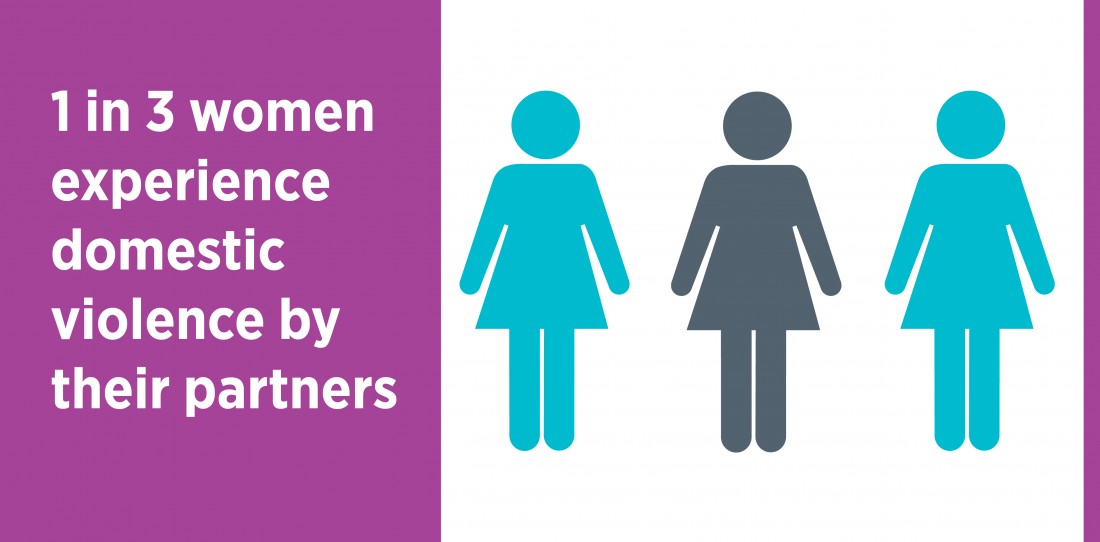
It was a typical day for Karen Smith as she went to work where she taught as an elementary school teacher in San Bernardino, California. Shortly after arriving, her life was cut short by her husband, Cedric Anderson. Smith was fatally shot in response to her leaving Anderson and the consideration of divorce (O’Hara, 2017). According to the Violence Policy Center, about three women are murdered every day in the United States by a current or former intimate partner. Smith, unfortunately, falls into this jarring statistic. (O’Hara, 2017).
This chilling and extremely disturbing behavior mirrors Cohen’s opening to family violence, or domestic abuse. Cohen begins with a similar story as he describes a young and impoverished couple, Bernadette Powell and Herman Smith, living with two children (415). For years, Smith had beaten her at the use of alcohol. Reportedly, one night Powell killed Smith in what she claimed to be an act of self defense (Cohen 415). Unfortunately, the jury thought otherwise. In summary, they blamed Powell for not leaving Smith sooner. This story and trial sparked a cultural and political debate in regards to family violence, more specifically, intimate partner violence (Cohen 416).
It is important to note that Cohen delves into three different categories of family violence. The first category is intimate partners. Because family boundaries may be hard to define, the term and concept of “intimate partners” include married spouses as well as romantic partners and individuals who consider themselves to be dating (Cohen 425). Hence, intimate partner violence refers to violence or abuse between such partners. It is important to note that violence of this type can occur between current or former intimate partners (Cohen 425). The second category focuses on children. This encompasses biological children, stepchildren, foster children, or adopted children. The third and final category refers to elders of which include older family members such as in-laws or parents (Cohen 424). With that being said, I will be examining the effects that intimate partner violence has on the family.

Cohen states that intimacy and a care relationship are the two elements that are typically seen between a victim and a perpetrator (424). Intimacy refers to people who love one another or know each other well and interact in private. A caring relationship, in this context, means that one party involved is responsible for the other’s well-being (Cohen 424). Cohen further states that, “…when the relationships include dependencies of support and caring, the emotional stakes of violence and abuse may be higher, such as long-term psychological pain or even post-traumatic stress disorder” (424).
Referring back to the opening story, Karen Smith was killed because she left her husband and was seeking divorce. Similarly, Bernadette Powell’s trial occurred after the termination of her marriage to Herman Smith. The jury involved in Powell’s trial questioned why she didn’t just leave if she was being hurt and abused by her husband. Interestingly enough, Cohen highlights several reasons as to why such abuse at home between intimate partners goes unreported to the authorities. Between 2006 and 2010, roughly 17% of people reported that the police would not or could not assist in any way. About 38% expressed a fear of reprisal or getting the perpetrator in trouble. Furthermore, 19% reported that they know how to deal with such behavior and personality while 10% think the abuse and violence is not important enough to report or seek help for. The remaining 16% of people report other reasons for no following through with a formal report to authorities (Cohen 427).
Another aspect of intimate partner violence that is important to note refers to the the individuals, or demographic groups, most likely at risk for such violence. Cohen reports that women, more specifically younger women, are most susceptible to rape or violence that causes personal injury. Furthermore, women with less education and suffering in poverty are more likely to experience abuse. When intimate partners experience economic hardships or live in poverty, they are more likely to take out such stressors on one another in the form of violence or abuse (Cohen 429). In addition, intimate partners that struggle with drug and alcohol related problems are more likely to be involved in violent relationships. Lastly, for most serious violence, women who leave their partners face great risk shortly after their departure (Cohen 429).
Referring back to the opening stories, Karen Smith was killed because she left her husband and was seeking divorce. Similarly, Bernadette Powell’s trial occurred after her abduction and the termination of her marriage to Herman Smith. The jury involved in Powell’s trial questioned why she didn’t just leave if she was being hurt and abused by her husband. Clearly, both women were at great risk of facing violence and abuse. In addition to this, Powell faced extreme economic hardship as she did not graduate high school. She struggled at home with two children as Smith failed as a mechanic. According to Cohen, their relationship was most susceptible to abuse due to the poverty that they lived in. In summary, these individuals not only faced violence because of financial stability and choosing to leave the abuse behind, but simply because they are women.
One might argue that if an individual is too scared to leave, why not report the violence and bring it to an end where safety is right around the corner. Cohen highlights several reasons as to why such abuse at home between intimate partners goes unreported to the authorities. Between 2006 and 2010, roughly 17% of people reported that the police would not or could not assist in any way. About 38% expressed a fear of reprisal or getting the perpetrator in trouble. Furthermore, 19% reported that they know how to deal with such behavior and personality while 10% think the abuse and violence is not important enough to report or seek help for. The remaining 16% of people report other reasons for no following through with a formal report to authorities (Cohen 427).
In addition to women being most susceptible to abuse, differences between racial-ethnic groups can contribute to intimate partner violence. Reported violence is more common among African-Americans rather than the White population. According to the Justice Bureau statistics, African-American women are victimized by intimate partner violence at rates roughly 35% higher than white women (O’Hara 2017).
Although intimate partner violence encompasses more forms of abuse other than murder, at an international viewpoint, women in the United States are twice as likely to be killed by a partner. According to the Centers for Disease Control, more than half of the women who are murdered each year in the United States are killed by a partner. On the contrary, only about 24% of women in Europe fall into this statistic (Stahl 2018).
Work Cited
Centers for Disease Control and Prevention (CDC). “What Is Intimate Partner Violence?” YouTube. YouTube, 15 May 2018. Web. 09 Apr. 2019.
Cohen, P. N. (2015). The family: Diversity, inequality, and social change. New York: W.W. Norton & Company.
May, Lucy. “When Getting Ahead Means Getting Beaten.” WCPO. 04 Feb. 2017. Web. 09 Apr. 2019.
O’Hara, Mary Emily. “Domestic Violence’s Real Cost: Nearly Three Women Die Every Day.” NBCNews.com. NBCUniversal News Group, 2017. Web. 09 Apr. 2019.
Stahl, Aviva. “Family or Partners Kill Women in US Twice as Often as in Europe.” Women’s Media Center. 2018. Web. 09 Apr. 2019.









 Emma's Family Blog